Sizing an Array for 1,000 kWh per Month
According to the U.S. Energy Information Administration (EIA), the average American household consumes approximately 890 to 1,050 kilowatt-hours (kWh) of electricity per month. As a result, “How many solar panels do I need to produce 1,000 kWh per month?” is the most common design benchmark in residential clean energy planning.
Generating 1,000 kWh each month requires designing a system that produces an average of 32.88 kWh per day. However, because solar irradiance varies widely by geographic latitude, weather patterns, and seasonal sun paths, the exact number of panels depends heavily on your local Peak Sun Hours (PSH).
In this engineering tutorial, we walk through the exact mathematical formulas used by NABCEP-certified solar designers, provide a comprehensive sun-hour conversion matrix, compare panel wattages (370W to 500W), and model battery pairing recommendations.
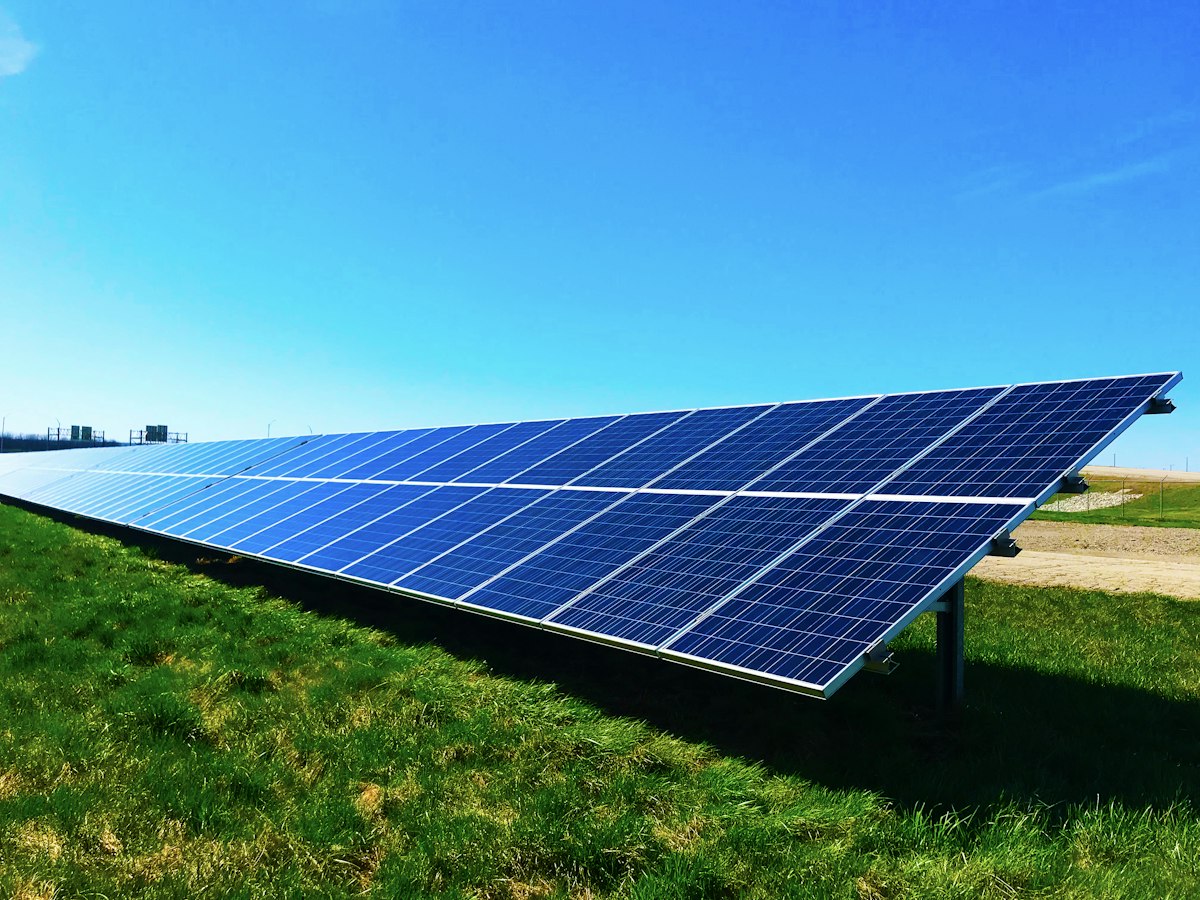
Figure 1: Residential solar photovoltaic installation sized for 1,000 kWh monthly generation.
Quick Answer: Generating 1,000 kWh per Month
To generate 1,000 kWh per month (12,000 kWh per year):
- Panel Quantity: 20 to 28 solar panels (assuming standard 400-watt monocrystalline modules).
- System DC Capacity: 8.2 kW to 11.2 kW DC.
- Daily Output Target: 32.88 kWh per day.
- Required Unshaded Roof Area: 390 to 550 square feet.
- Turnkey Installed Cost (2026): $23,300 to $31,900 ($16,300 to $22,300 after the 30% Federal ITC tax credit).
Interactive Tool Callout: Calculate your exact system requirements in real time using our Solar System Size Calculator or simulate daily, monthly, and seasonal yields with the Solar Panel Output Calculator.
1. The Step-by-Step Sizing Equation
Clean energy engineers use a simple 3-step formula to calculate required solar array capacity from monthly consumption:
Step 1: Calculate Daily Energy Consumption (E_daily)
Divide 1,000 kWh by the average days in a calendar month (365.25 ÷ 12 = 30.417 days):
Daily kWh = 1,000 kWh ÷ 30.417 days = 32.88 kWh per dayStep 2: Calculate Required Array DC Rating (P_DC)
Divide daily energy by your location’s daily Peak Sun Hours (PSH), then factor in standard system derating losses (inverter conversion, wire resistance, dust, soiling, and module operating temperature derates per NREL PVWatts benchmarks, typically 0.82):
Array kW DC = Daily kWh ÷ (Peak Sun Hours × 0.82)Step 3: Determine Solar Panel Count
Multiply array kilowatts by 1,000 to convert to watts, then divide by the rated wattage of your chosen solar panels:
Number of Panels = (Array kW DC × 1,000) ÷ Panel WattageWorked Calculation Example (4.5 Peak Sun Hours)
Assume a homeowner in North Carolina or Ohio with an annual average of 4.5 PSH/day using standard 400W monocrystalline panels:
- Daily requirement =
32.88 kWh per day. - Array capacity =
32.88 ÷ (4.5 × 0.82) = 32.88 ÷ 3.69 = 8.91 kW DC. - Panel count =
8,910 Watts ÷ 400 Watts = 22.28→ 23 panels.
2. Peak Sun Hour Matrix for 1,000 kWh/Month
Because sunlight availability differs drastically across the country, here is how panel counts shift based on your local solar resource:
| Average Peak Sun Hours (PSH) | Representative US Locations | Required System Size (kW DC) | 370W Panels Needed | 400W Panels Needed | 450W Panels Needed | Roof Footprint (400W) |
|---|---|---|---|---|---|---|
| 3.2 PSH | Seattle, WA; Buffalo, NY; Anchorage, AK | 12.5 kW DC | 34 Panels | 32 Panels | 28 Panels | 627 sq ft |
| 3.6 PSH | Portland, OR; Cleveland, OH; Pittsburgh, PA | 11.1 kW DC | 30 Panels | 28 Panels | 25 Panels | 549 sq ft |
| 4.0 PSH | Chicago, IL; Boston, MA; Detroit, MI | 10.0 kW DC | 27 Panels | 25 Panels | 23 Panels | 490 sq ft |
| 4.5 PSH | Raleigh, NC; Philadelphia, PA; Kansas City, MO | 8.9 kW DC | 24 Panels | 23 Panels | 20 Panels | 451 sq ft |
| 5.0 PSH | Atlanta, GA; Dallas, TX; Orlando, FL | 8.0 kW DC | 22 Panels | 20 Panels | 18 Panels | 392 sq ft |
| 5.5 PSH | Denver, CO; Albuquerque, NM; Salt Lake City, UT | 7.3 kW DC | 20 Panels | 19 Panels | 17 Panels | 372 sq ft |
| 6.0+ PSH | Phoenix, AZ; Las Vegas, NV; Palm Springs, CA | 6.7 kW DC | 18 Panels | 17 Panels | 15 Panels | 333 sq ft |
Calculated using an industry-standard 0.82 system derate factor and south-facing 180° azimuth.
3. Comparing Panel Wattages: 370W vs 400W vs 450W
Selecting higher-wattage modules allows you to achieve 1,000 kWh/month using fewer physical panels, which is essential if you have limited south-facing roof space:
- 370W Standard Panels: Budget-friendly older format. Sizing for an 8.9 kW system requires 24 panels and approximately 465 sq ft of space.
- 400W Modern High-Efficiency Panels: The residential sweet spot in 2026. The same 8.9 kW system requires 23 panels and 445 sq ft of roof area.
- 450W Commercial / Large-Format Panels: Ideal for homes with tight roof planes or hip roofs. Sizing an 8.9 kW system requires only 20 panels, saving over 40 sq ft of roof space.
- 500W+ Commercial Modules: Primarily designed for large commercial flat roofs or ground-mount systems due to their 7.5-foot length and heavier physical weight (~60 lbs).
Compare cell technologies and 25-year degradation rates in our N-Type TOPCon vs PERC Solar Panels Guide.
4. What Size Battery Do You Need for 1,000 kWh/Month?
A common misconception is that solar panels alone can provide electricity during nighttime or grid blackouts. To achieve true energy independence or avoid expensive Time-of-Use (TOU) on-peak rates under California NEM 3.0, you must pair your array with an Energy Storage System (ESS):
- Daily Household Consumption: ~33 kWh/day.
- Overnight Energy Use (6:00 PM to 8:00 AM): Typically 40% to 50% of daily total, or 13 to 16 kWh.
- Recommended Battery Storage: A single 10 kWh to 15 kWh lithium iron phosphate (LiFePO4) battery bank (such as an Enphase IQ 5P or Tesla Powerwall 3) easily covers critical nighttime loads and whole-home essentials.
- Multi-Day Autonomy: For off-grid installations needing 2 to 3 days of rainy-day reserve, plan for a 30 kWh to 45 kWh battery bank.
Size your exact battery bank and compare chemistries with our Solar Battery Size Calculator.
5. 2026 Turnkey Costs & 30% Federal ITC Tax Credit
At an average turnkey installation cost of $2.85 per watt, here is the financial picture for an array generating 1,000 kWh per month:
| Required Array Size | Panel Count (400W) | Gross Installed Cost | 30% Federal Tax Credit (IRS Sec 25D) | Net Out-of-Pocket Cost | Estimated Monthly Electric Bill Offset |
|---|---|---|---|---|---|
| 8.0 kW DC (Sunbelt) | 20 Panels | $22,800 | -$6,840 | $15,960 | $160 – $220 / mo |
| 8.9 kW DC (Mid-US) | 23 Panels | $25,365 | -$7,610 | $17,755 | $175 – $240 / mo |
| 10.0 kW DC (Northern US) | 25 Panels | $28,500 | -$8,550 | $19,950 | $190 – $265 / mo |
| 11.1 kW DC (Northwest) | 28 Panels | $31,635 | -$9,491 | $22,144 | $210 – $290 / mo |
Explore turnkey pricing benchmarks and soft-cost breakdowns in our Solar Panel Cost Calculator.
Next Steps
Now that you know the math behind offsetting 1,000 kWh per month:
- Verify your local Peak Sun Hours using our Solar Panel Output Calculator.
- Confirm your roof has at least 400 to 500 sq ft of clear south- or west-facing space in the Solar Panel Roof Area Calculator.
- Calculate your exact panel configuration and module layout using the Panel Quantity Finder.
Calculations, equipment recommendations, and code references in this article adhere to NREL PVWatts v8 benchmarks, NFPA 70 NEC electrical guidelines, and IRC R324 structural fire codes. This guide is provided for preliminary planning and educational purposes. Consult a licensed electrical contractor and municipal building department prior to permitting or installing hardware.
Ready to size your own system?
Use our free solar engineering calculators to simulate your system in real time.